

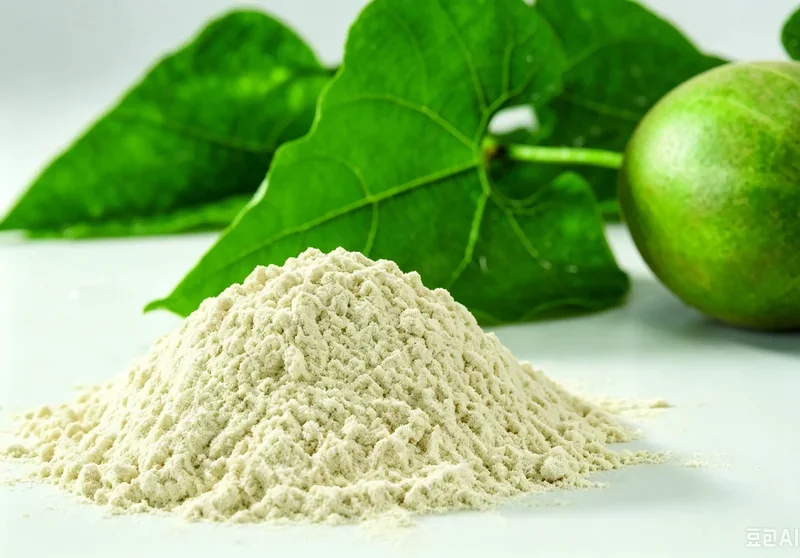
The 23rd China-ASEAN Expo — a neighbourhood marketplace where Indonesia, Malaysia, Thailand and Vietnam came to partner, not just to buy — put RCEP origin rules and supply-chain resilience on the same table as the handshake. Exhibitors came for the matchmaking board with medicinal-food plant extracts a regional partner can carry across the border, paperwork ready. Every lot we send leaves with its certificate of analysis and a retained sample paired to the batch.
A Shared-Market Room, and Why the Tie Outran the Talk
The China-ASEAN Expo — held in Nanning as the 23rd edition, in the year China and ASEAN marked five years of comprehensive strategic partnership and signed the Free Trade Area 3.0 upgrade — ran on a trade-and-investment主线, promoting "buy in China, export to China, invest in China," with chain-leader firms bringing smaller suppliers along and an AI-powered matchmaking service. The Indonesian investment minister Rosan made the theme plain: a firm, long-term partnership, a "two countries, twin parks" ecosystem, and supply-chain resilience under RCEP and FTA 3.0.
We went because that framing reset what a plant house is for. A Guangxi medicinal-food botanical used to be pitched as an export SKU on a price sheet. At this expo it was pitched as a tie — a botanical a Southeast Asian partner could carry across the border, localize and stand behind, with the paperwork that lets it land. The room was where the tie outran the talk.
Who Came to Partner, Not Just to Procure
The floor drew ASEAN distributors, "two countries, twin parks" operators, regional wellness and functional-food brands and the buyers surfaced by the expo's "ASEAN demand zone" and AI matchmaking — over 8,000 pre-paired meetings and some 2,000 on-site precision pairings. They were not buying a drum; they were adopting a partner they could resell and defend in their own market.
That crowd set our table. We were not the biggest name, and we did not pretend to be. We were one of the few carrying the same plant from a Guangxi field to a food-grade, medicinal-food-documented extract that a regional partner could actually carry — RCEP-ready origin paperwork, standards alignment and a supply note all intact. The people who stopped wanted neither a commodity powder nor a borderless promise: they wanted a plant material whose entry they could file and whose supply they could trust month to month. Listening there told us which of our extracts already read as partner-ready and which were still only a sample.
What We Set on the Matchmaking Board: A Botanical the Region Can Carry
We did not bring a catalogue of maybes. We brought medicinal-food plant extracts from Guangxi chosen because a regional partner could carry them across the border: essential oils, concretes and absolutes, plus single-plant fractions and active-rich cuts mapped to the functional-food, wellness and flavour zones of the ASEAN market. The routes behind each lot — Living-Fragrance physical extraction, aroma concentration, dynamic multi-stage countercurrent extraction, supercritical fluid extraction, molecular distillation with controlled release — are paired into the cross-border pack we give a regional partner, so a consignment and a customs file quote the same lawful root.
A regional partner asks differently from a dose buyer, a spec-book buyer, a resilience buyer or an F&B lead. Not "what is the active" or "will it file here," but "can my market receive it, and can I stand behind it there." We built the samples so the origin paperwork, the standards alignment and the supply note arrived with the drum, not as a promise to chase later.
What a Regional Partner Could Enter
Trust, to a regional partner, is a consignment that clears the border and repeats next season. The plant behind the lot sits in Guilin, Guangxi — 25,000 m² among the region's aromatic and medicinal-food crops — and we chair the Guangxi Flavor & Fragrance Association with patented extraction and release behind every regional partner.
Every lot we send leaves with its certificate of analysis and a retained sample paired to the batch, so a regional partner can recover a retained sample years on and repeat the test. On compliance we prepare for the market a regional partner serves — RCEP-origin documentation and food-grade, medicinal-food-homology files where the product is eaten, REACH where it is scented for Europe — and we mark exactly where a claim stops. Lead times run about two weeks for stock items and several weeks for made-to-order fractions; minimum order sizes follow the format a regional partner specifies, and we confirm both before a contract. We would rather land the partner than list the product.
At the Matchmaking Desk: What the Link Had to Last
The work was not the booth; it was the desk. An ASEAN distributor wanted a natural Guangxi extract to localize into a wellness line, but the question was not the price — it was the link: would the origin paperwork satisfy RCEP and the destination authority, would the standards align with the local food and flavour rules, and could the supply hold across seasons so the partner was never caught short. Our standard natural dossier said none of that. We built that layer: an RCEP-ready origin and standards file, a sustainability note for the green-economy chapter of FTA 3.0, and a season-by-season supply commitment, so the plant extract earned a line in a partnership, not just a purchase order. That was not a flawless first pass; it was a candid, same-week redo done while the expo was still running.
A second thread ran with a small ASEAN buyer surfaced by the AI matchmaking, who needed a chain-linked supplier — a Guangxi source that a larger regional player could carry rather than build from scratch. We showed the "larger-firm-brings-smaller-supplier" fit. Both threads proved the same point: in a room built on the handshake, the value is the tie you can keep, not the product you can list.
What This Brings Home, and How to Reach Us
The China-ASEAN Expo was one stop on a longer road, and the clearest signal yet that our naturals belong in the partnership lane, not only in the export catalogue. We plan to keep showing up where ASEAN meets Chinese supply, and to arrive each time with materials we can clear and carry across the border. If you are an ASEAN distributor, twin-park operator or regional wellness brand and need medicinal-food plant extracts a partner can carry — with the RCEP paperwork, the standards alignment and the supply behind them — write to us with the application, the destination market, and the tie you need to build.
Our technical team replies directly to every regional partner, and we can send certificates, retained-sample history and trial lots on request. Begin the conversation on this site's contact channels — we reply to a regional partner, and the lot answers to its partner.
This article was published on 2026-11-07, and last updated on 2026-11-07. The article will be continuously updated.