

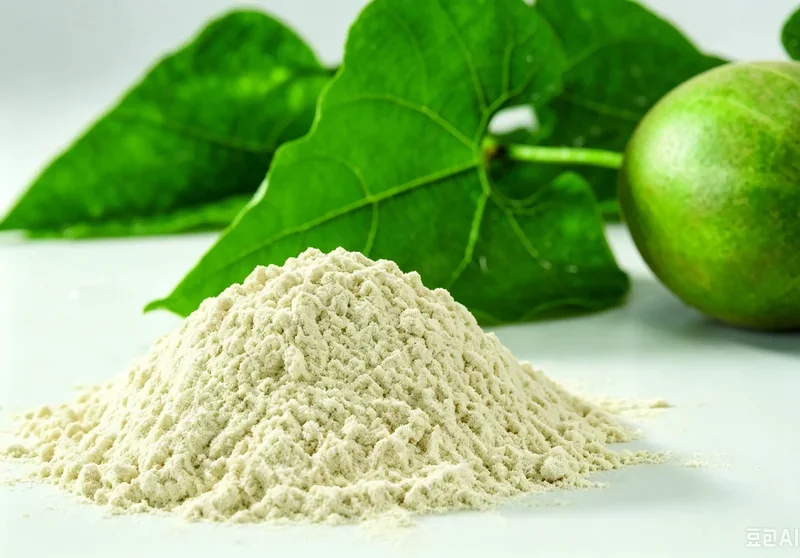
FIC 2026 — the 29th Food Ingredients China — filled Shanghai with 1,697 exhibitors, 170,000 m² and professional buyers from 117 countries, with a full session devoted to regulations and standards. Exhibitors came for the rulebook room with medicinal-food plant extracts classified before they are showcased. Every lot we send leaves with its certificate of analysis and a retained sample cited to the batch.
A Standards Room, and Why the Spec-Book Preceded the Shelf
FIC — the food-additives and ingredients benchmark run by the China Food Additives & Ingredients Association — marked its 29th edition at Shanghai's National Exhibition & Convention Center on 17–19 March 2026: 1,697 exhibitors (1,278 domestic, 419 international), 170,000+ m², 93,235 unique visitors and 164,895 visits from 117 countries and regions. Alongside the floors sat the Machinery & Testing Devices Pavilion and three forum tracks — an academicians' session, a regulations-and-standards session, and 55 new-product and new-technology launches.
We went because the standards session said the quiet part aloud: this room buys by the rulebook. A Guangxi medicinal-food botanical used to be judged on whether it scaled and functioned. At FIC 2026 it was judged first on whether it is lawful where it lands — additive, flavouring or food-homology ingredient, each market with its own list — and only then on whether it is good. The room was where the spec-book preceded the shelf.
Who Bought by the Rulebook
The floor drew multinational sourcing teams, regulatory and QA leads, new-product scouts (41.7% of visitors came hunting new products) and the Asian neighbour buyers who topped the overseas list — Korea, Taiwan, Malaysia, Russia, Thailand. They were not buying a scent or a claim; they were buying a classification they could file and a spec they could defend.
That crowd set our table. We were not the biggest name, and we did not pretend to be. We were one of the few carrying the same plant from a Guangxi field to a food-grade, medicinal-food-documented extract that arrived pre-classified — standards citations, per-market notes and a spec page all intact. The people who stopped wanted neither a bulk powder nor a botanical romance: they wanted a plant material they could enter into their rulebook without a caveat. Listening there told us which of our extracts already read as lawful-first and which were still only a sample.
What We Set on the Standards Page: A Botanical With a Classification
We did not bring a catalogue of maybes. We brought medicinal-food plant extracts from Guangxi chosen because a rulebook buyer could classify them on the spot: essential oils, concretes and absolutes, plus single-plant fractions and active-rich cuts mapped to the flavouring, ingredient and functional zones around us. The routes behind each lot — Living-Fragrance physical extraction, aroma concentration, dynamic multi-stage countercurrent extraction, supercritical fluid extraction, molecular distillation with controlled release — are classified into the standards page we give a spec-book buyer, so a classification ruling and a launch spec quote the same lawful root.
A spec-book buyer asks differently from a functional buyer, a trend buyer, a resilience buyer or an F&B lead. Not "what is the active" or "will it hold in milk," but "what is it under the rules, and can I file it." We built the samples so the classification, the citations and the spec page arrived with the drum, not as a promise to chase later.
What a Spec-Book Buyer Could Classify
Trust, to a spec-book buyer, is a page that survives an audit. Behind the lot is a 25,000 m² plant in Guilin, Guangxi, ringed by the region's aromatic crops and medicinal-food plants; we hold the chair of the Guangxi Flavor & Fragrance Association, and our extraction and release are patent-covered for a spec-book buyer.
Every lot we send leaves with its certificate of analysis and a retained sample cited to the batch, so the spec-book buyer can trace any drum to its year and repeat the analysis. On the compliance side we build for the market a spec-book buyer reaches — food-grade and medicinal-food-homology files where the product is eaten, REACH where it is scented for Europe — stating plainly where a claim must stop. We turn stock around in about two weeks and custom fractions in several; order minimums track the format a spec-book buyer uses, and we settle both before a contract. We would rather classify the plant than decorate the claim.
On the Launch Stage: What the Release Had to Clear
The work was not the booth; it was the page. A regional sourcing team wanted a natural Guangxi extract entered into a multi-market ingredient list, but the question was not the quality — it was the classification: what the extract counts as in each destination market, which standards list it cites, and whether our paper would hold beside the rulebook speakers on the standards session. Our standard natural dossier said none of that. We built that layer: a per-market classification note, standards citations, and a spec page formatted for a compliance file, so the plant extract earned a line in their list. That was not a flawless first pass; it was a candid, same-week redo done while the session was still running.
A second thread ran with a new-product scout hunting the 55-launch stage, who wanted a new cut released as a real SKU — public spec, application data and a supply commitment — not a lab sample in a vial. We assembled the launch pack. Both threads proved the same point: in a room that buys by the rulebook, the value is the material you can classify and file, not the one that only smells natural.
What This Codifies, and How to Reach Us
FIC 2026 was one stop on a longer road, and the clearest signal yet that our naturals belong in the rulebook lane, not only in the sample box. We plan to keep showing up where ingredient law meets the sourcing desk, and to arrive each time with materials we can classify before we showcase. If you build food, flavour or health products and need medicinal-food plant extracts that arrive pre-classified for the market you serve — with the citations, the spec page and the supply behind them — write to us with the application, the destination markets, and the rules you need to clear.
Our technologists respond to a spec-book buyer in person, and we can share certificates, retained-sample logs and trial lots on request. Reach us through the contact channels on this site — we respond to a spec-book buyer, and the lot answers to its citation.
This article was published on 2026-11-07, and last updated on 2026-11-07. The article will be continuously updated.